Vintage 1982 Original Parts: An Embroidery Review
As a designer who has digitized and stitched countless birthday graphics, I approach every new file with a healthy dose of skepticism. We have all downloaded promising T-Shirt Designs only to find they are too detailed for thread or lack the structural integrity needed for fabric. When evaluating the Vintage 1982 Original Parts Birthday design assets, my primary focus is not just how it looks on a screen, but how it translates into a tangible, high-quality handmade product. This review breaks down the practical realities of using this graphic for real-world embroidery projects, moving beyond the digital preview to assess its viability for commercial and personal use.
First Impressions and Visual Personality
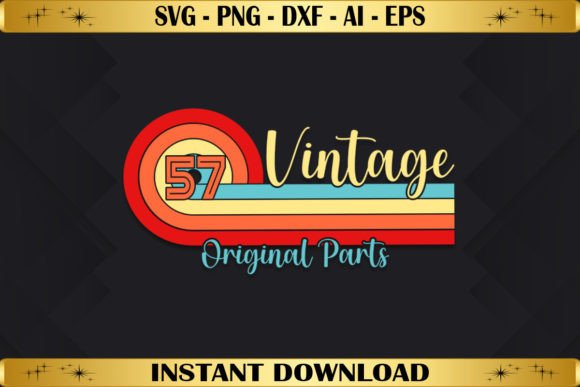
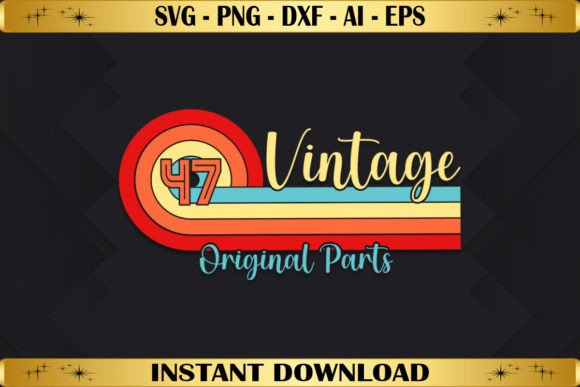
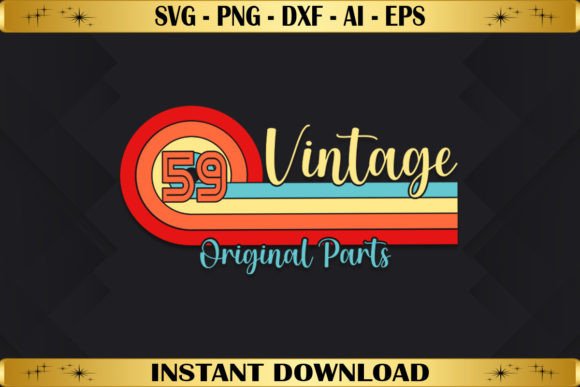
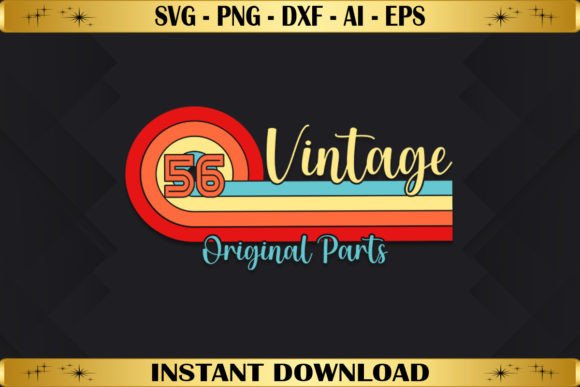
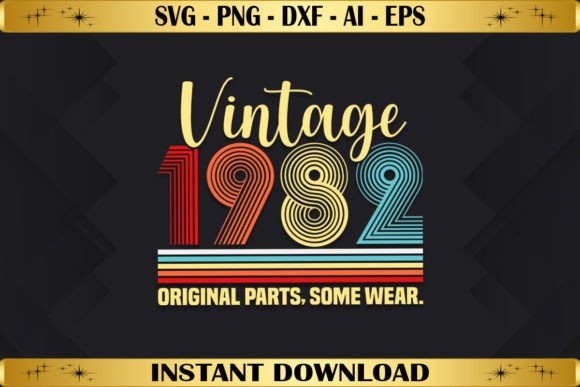
The initial appeal of the Vintage 1982 Original Parts Birthday lies in its nostalgic typography and balanced composition. As a set of Graphics, it carries a distinct retro industrial aesthetic that resonates deeply with customers celebrating milestones. The layout suggests a bold, centered focal point, which is generally ideal for machine embroidery. However, visual balance on a monitor does not always equate to stitch balance on fabric. The "Original Parts" phrasing implies a mechanical or automotive influence, often accompanied by distressed textures or bold sans-serif fonts. For an embroiderer, this immediately raises questions about edge definition. Will the distressing translate as intentional texture, or will it look like skipped stitches? Does the font weight support a clean satin stitch, or will it require a fill stitch that might make the garment stiff?
From a design hierarchy perspective, the year "1982" acts as the anchor. In embroidery, numbers are often easier to digitize cleanly than script text because of their consistent stroke width. This design appears to leverage that advantage, making it a strong candidate for clear legibility even at smaller sizes. The mood is celebratory yet rugged, positioning it perfectly for adult apparel rather than delicate nursery items. It feels like a design meant for heavyweight cottons, denim, or canvas, where the vintage theme can be fully realized without fighting against the fabric's character.
Real-World Application: The Custom Sweatshirt Test
To truly judge this embroidery file, I mentally placed it in a specific production scenario: creating a custom crewneck sweatshirt for a client’s 40th or 50th birthday (depending on the current year relative to 1982). Sweatshirts are a staple for Etsy seller inventories and small shop product lines, but fleece presents unique challenges due to its pile and stretch.
In this scenario, the Vintage 1982 Original Parts Birthday design would serve as the primary chest graphic. Because the provided files include SVG, DXF, AI, and EPS formats, the vector paths are available for redigitizing or modifying. This is crucial. A print-ready PNG is excellent for sublimation or vinyl, but for embroidery, I need to verify if the vector lines are closed and smooth. If I were stitching this on a fleece sweatshirt, I would likely increase the underlay density to prevent the fabric pile from poking through the stitches. The bold nature of this specific birthday theme allows for a slightly heavier top stitch, which helps compress the fleece and creates a professional, raised embossed effect.
For a personalized gift of this caliber, customer trust hinges on durability. If the design is too sparse, it gets lost in the fabric texture; if it is too dense, it creates a bulletproof patch that ruins the drape of the sweatshirt. Based on the visual weight of "Original Parts," this design seems to strike a middle ground suitable for mid-weight stabilizers and standard polyester or rayon threads. It avoids the common pitfall of overly intricate shading that turns muddy when stitched, instead relying on strong silhouettes that read well from a distance.
Navigating Fabric Limitations and Hoop Constraints
While this design shows promise for sturdy garments, caution is required when adapting it for different substrates. Not every embroidery project is created equal. If you intend to use this for lightweight tees or performance wear, the density must be managed carefully. The "vintage" aesthetic often involves solid blocks of color or text. On thin fabric, these areas can cause puckering if the tension isn't perfect or if the stabilizer is insufficient.
I would advise against using this specific graphic for curved surfaces like caps unless you have verified the height-to-width ratio. Cap frames have limited vertical space, and wide designs like "Original Parts" can distort or push out of the safe stitching area. Similarly, highly textured fabrics like terry cloth towels require a topping to maintain the crispness of the lettering. Without a water-soluble topping, the loops of the towel could obscure the fine details of the vintage styling.
Small hoop sizes also present a challenge. If your machine only accommodates a 4x4 hoop, you may need to resize or split the Vintage 1982 Original Parts Birthday design. Resizing vector-based graphics for embroidery is safer than resizing raster images, but you must still check the minimum text height. Letters below 6mm often become illegible regardless of stitch quality. Always measure the physical dimensions of the design elements before committing to a run, especially if you are producing commercial embroidery batches where consistency is non-negotiable.
Professional Standards and Business Value
For creative entrepreneurs and apparel decorators, the value of a design extends beyond aesthetics. It encompasses versatility and legal safety. The inclusion of multiple file types (SVG, PNG, DXF, AI, EPS) in the zip folder indicates a professional approach to asset delivery. For an Etsy seller, having the SVG and PNG allows for immediate creation of printable mockup listings or hybrid products that combine embroidery with heat transfer vinyl. This flexibility maximizes the return on investment for the design purchase.
However, professional presentation requires due diligence. Before listing any finished product featuring this design, verify the licensing terms included in the download. Just because a file is labeled "Print Ready" or sold as a digital asset does not automatically grant unlimited commercial embroidery rights. Clarifying whether you can sell physical embroidered goods versus digital files protects your business reputation. Furthermore, brand consistency matters. If your shop specializes in minimalist line art, this bold vintage graphic might clash with your existing aesthetic. Conversely, if you focus on retro nostalgia, this design reinforces your niche authority.
Essential Pre-Stitch Checklist for Makers
Before loading this design into your machine for a final product, follow this practical workflow to ensure success:
- Verify Vector Integrity: Open the SVG or DXF in your embroidery software to ensure paths are continuous. Print-ready vectors sometimes contain open nodes that confuse auto-digitizing features.
- Test Stitch Density: Run a sample on scrap fabric identical to your final project. Check if the "distressed" elements stitch out cleanly or if they create excessive thread breaks.
- Assess Stabilizer Needs: Match the stabilizer to the fabric weight, not just the design size. Heavy vintage text on light cotton needs cut-away backing; on denim, tear-away may suffice.
- Check Thread Contrast: Vintage designs often rely on muted tones. Ensure your thread colors provide enough contrast against the garment color so the "1982" remains readable after washing.
- Confirm Dimensions: Measure the actual stitch-out area. Do not assume the digital preview matches the physical output scale, especially if converting between file formats.
- Review Licensing: Double-check the included documentation regarding commercial use for embroidered goods versus digital redistribution.
Ultimately, the Vintage 1982 Original Parts Birthday represents a versatile asset for makers who understand the translation from screen to stitch. Its bold, nostalgic character makes it a natural fit for sweatshirts, tote bags, and milestone gifts, provided the embroiderer respects the technical requirements of the medium. By treating this graphic as a starting point for customization rather than a one-size-fits-all solution, you can produce high-value, professional results that delight customers and stand up to the rigors of daily wear. Whether you are crafting a single personalized gift or stocking a boutique inventory, practical testing and thoughtful application will always yield better results than blind faith in a digital preview.